Lower Back Pain
Loosens stiff lumbar segments and relaxes tight paraspinal muscles.
Roller Therapy for Spinal Flexibility
From desk posture to old injuries
When you sit for long hours, recover from an old injury, or live with chronic lower back tension, the small joints between your vertebrae start to lose their natural gliding motion. The discs that cushion those joints depend on movement to soak up nutrients and flush out waste, a process called imbibition. Without that pumping action, paraspinal muscles tighten, segments stiffen, and pain or stenosis symptoms creep in. Many patients tell us their lower back feels locked up first thing in the morning or after a long drive from Brandon or Sun City Center.
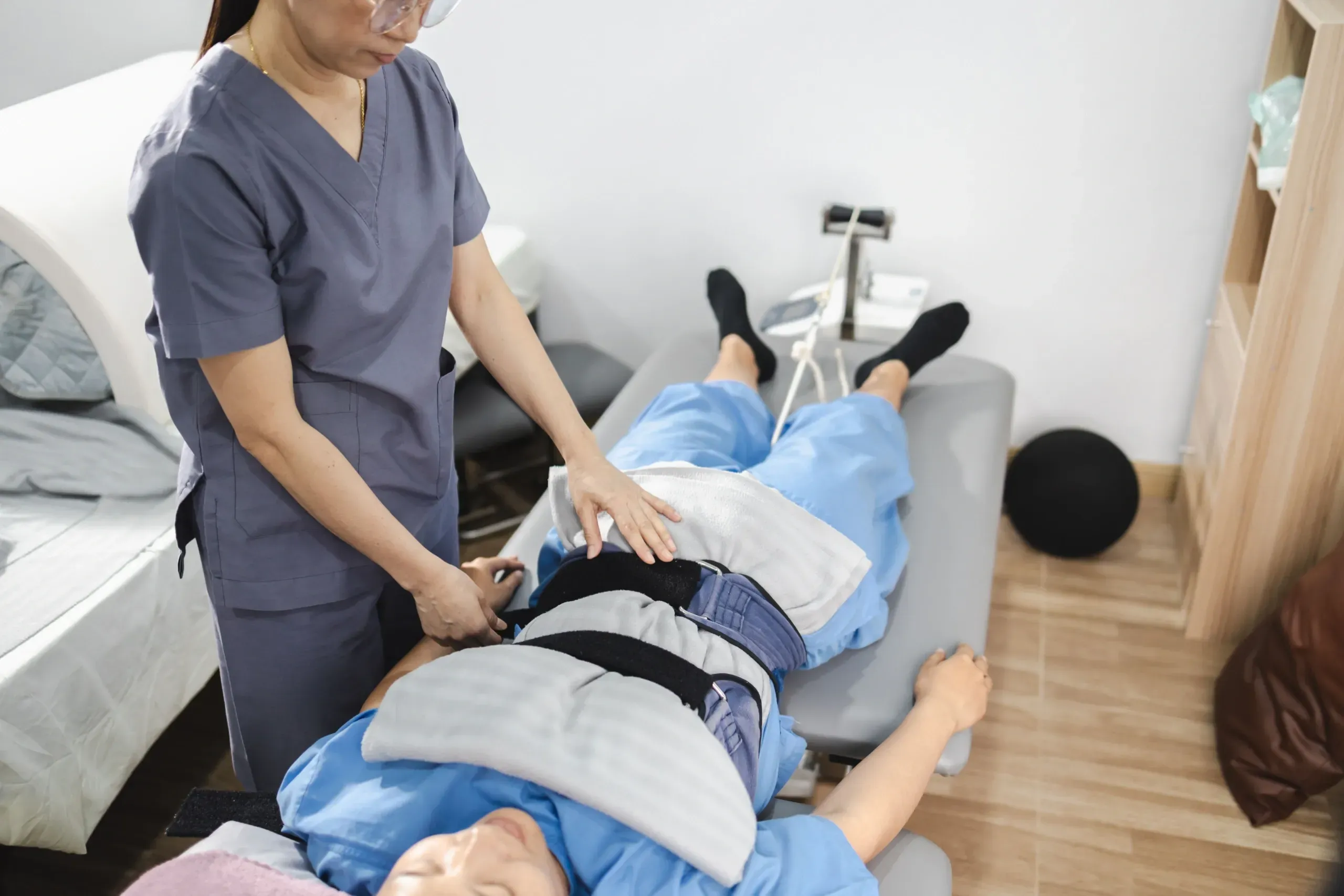
Intersegmental traction is the simple, gentle answer between adjustments. You lie face up on a padded table while slow-moving rollers travel up and down your spine, mobilizing one vertebra at a time. The motion encourages disc rehydration, relaxes tight paraspinal muscles, and gradually restores segmental flexibility. Most patients find the table relaxing, almost like a slow back massage. Dr. David often pairs this roller therapy with a hands-on adjustment so the spine is warmed up, mobile, and easier to correct, with results that hold longer.
Gentle Segmental Spinal Mobilization
Intersegmental traction is a passive chiropractic therapy delivered on a padded roller table. As you rest face up, motorized rollers travel slowly along the cervical, thoracic, and lumbar regions of your spine, gently flexing each vertebral segment in turn. The motion is rhythmic and low-force, designed to mobilize stiff facet joints, relax paraspinal muscles, and encourage fluid exchange in the intervertebral discs.
The mechanism is straightforward. Healthy discs do not have their own blood supply; they rely on movement to pump nutrients in and waste out (a process called disc imbibition). When segments become hypomobile from prolonged sitting, repetitive strain, or chronic guarding, that pumping action slows down. The roller table reintroduces gentle segmental motion, which helps restore disc nutrition, decreases reflex muscle tension, and improves the spine's overall flexibility. This is different from full spinal decompression therapy. Decompression uses computer-controlled axial pull to create negative pressure inside a specific disc, while intersegmental traction is broader, gentler, and focused on restoring movement across the whole spine. The two are often used together as complementary tools (see our advanced spinal decompression therapy page for more on that approach).
The roller table is widely used in chiropractic clinics across the United States and is considered very safe when screened and supervised properly. Dr. David Fetherman positions the rollers based on your height and specific complaint so the motion targets the right region of your spine.
Gentle, effective, drug-free
2000+ Satisfied patients
Low-force segmental motion suitable for sensitive or stiff spines.
Targets one segment at a time to restore even flexibility.
Pumping motion supports fluid exchange and disc imbibition.
Warms tight muscles so manual adjustments are easier and last longer.
Eases paraspinal tension that often drives recurring back pain.
Most patients describe it as relaxing, similar to a slow back massage.
Compare the options
| Treatment | Mechanism | Time | Results | Duration | Downtime | Best For |
|---|---|---|---|---|---|---|
| Intersegmental Traction (Roller Table) | Gentle motorized rolling motion across whole spine | 10-15 minutes | Gradual mobility, relaxed muscles | Cumulative over series | None | General stiffness, disc nutrition, prep for adjustment |
| Spinal Decompression | Computer-controlled axial pull to create negative disc pressure | 20-30 minutes | Targeted disc and nerve relief | Effects build over 4-6 weeks | None | Specific disc herniation, sciatica, radiculopathy |
| Manual Spinal Mobilization | Hands-on rhythmic glides applied by chiropractor | 5-10 minutes | Immediate segmental release | Per session | None | Acute restrictions and targeted segments |
Most chiropractic patients qualify
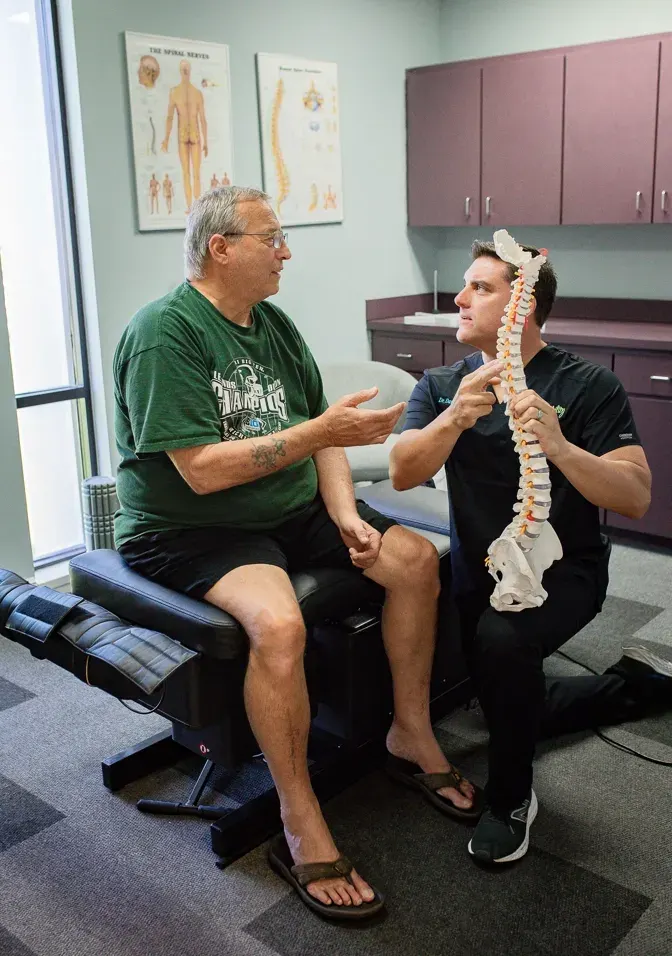
Intersegmental traction is one of the gentlest modalities in our office and works well as a stand-alone session or as preparation for a hands-on adjustment. That said, every spine deserves a quick screening first.
Dr. David reviews your history, imaging, and any red-flag symptoms before recommending the roller table. If the table is not appropriate, he will redirect you to a safer alternative such as manual mobilization or guided rehabilitative exercises.
What to expect on the roller table
Dr. David helps you lie face up on the padded table and aligns the rollers to your spine height.
Dr. David starts the motorized rollers, which travel slowly up and down your spine for 10-15 minutes.
Dr. David finishes with a quick mobility check and aftercare tips, or moves into a hands-on adjustment.
Very low risk
Intersegmental traction is one of the lowest-risk modalities used in chiropractic care. The rolling motion is gentle, motorized, and stays well within normal spinal motion. The most common side effect is mild, short-lived muscle soreness, similar to what you might feel after a deep tissue massage, especially after your first session. A small number of patients report brief lightheadedness when sitting up; this usually resolves within a minute.
Serious adverse events are very rare when patients are screened properly. Risks increase if the table is used in the presence of acute fractures, severe instability, advanced osteoporosis, active spinal infection, or shortly after spinal surgery without surgeon clearance. This is why we evaluate carefully before any rolling session begins.
Dr. David takes a focused history and reviews any imaging before starting roller therapy. If you ever experience new numbness, weakness, loss of bowel or bladder control, severe radiating pain, or fever after a session, contact our Apollo Beach or Riverview office right away or seek urgent care.
Intersegmental traction is one of the most affordable modalities at Spine-Ability. In the Tampa Bay market, stand-alone roller table sessions typically range from $20 to $40, and in many cases the table is included at no extra cost when bundled with a chiropractic adjustment or rehab visit. We will confirm exact pricing during your first consultation so you know what to expect before your session.
For active patients, we usually recommend a series of 6 to 12 sessions over 4 to 6 weeks, often paired with adjustments or other modalities. Multi-visit packages bring the per-session cost down further.
If cost is a concern, ask our front desk in Apollo Beach or Riverview about prepaid bundles. We will build a plan that fits your goals and your budget.
Apollo Beach and Riverview, FL
Dr. David screens for nerve and stability concerns before each session.
Concierge-style care across our Apollo Beach and Riverview offices.
Used as a warm-up to make manual corrections gentler and longer-lasting.
VA Community Care and auto-injury patients welcome at both locations.
Roller table therapy is available at both our Apollo Beach and Riverview clinics, making it easy to fit sessions into your schedule wherever you are in the Tampa Bay area.
Dr. David tailors the number of sessions, roller height, and intensity to your specific diagnosis, ensuring the therapy supports your broader chiropractic care goals.
Treatments that pair well with intersegmental traction at Spine-Ability.
Non-surgical decompression for herniated discs, sciatica and chronic low-back pain - gently separates vertebrae to relieve nerve pressure.
Learn MoreHands-on spinal adjustments using Diversified, Gonstead and Activator techniques to restore alignment, calm nerve pressure and free up motion.
Learn MoreInstrument-assisted myofascial release and trigger-point work paired with adjustments to release tension and improve mobility.
Learn MoreCommon questions about the roller table
It is a passive chiropractic therapy performed on a padded roller table. Slow-moving rollers travel along your spine, mobilizing one segment at a time, relaxing muscles, and supporting disc health.
Motorized rollers move up and down beneath you, creating gentle, rhythmic flexion at each spinal segment. The motion encourages disc imbibition and relaxes paraspinal muscles without any forceful manipulation.
Roller therapy is most often used for lower back stiffness, mild to moderate spinal stenosis, disc-related pain once inflammation has settled, and recurring muscle spasms across the lumbar and thoracic spine.
No. Most patients describe the table as relaxing, almost like a slow back massage. A small amount of muscle soreness after the first session is normal and short-lived.
A typical roller table session runs 10 to 15 minutes. It is often combined with a chiropractic adjustment or another modality during the same visit.
Most patients benefit from a series of 6 to 12 sessions over 4 to 6 weeks. Dr. David will recommend a personalized plan based on your exam, imaging, and goals.
The standard roller table is not recommended during pregnancy. Our team offers low-force, pregnancy-safe alternatives, including Webster Technique with Dr. Marissa or Dr. Amber.
Yes. We accept Florida PIP for auto and personal injury cases and VA Community Care referrals at both our Apollo Beach and Riverview locations.