Does Shockwave Therapy Hurt?
Shockwave therapy delivers strong acoustic pulses to chronic tendon and fascia injuries. It is intense, but not painful for most patients, and the sensation actually signals that the tissue is responding. Here is exactly what to expect at Spine-Ability.
If your provider has recommended shockwave therapy, or if you found it while researching stubborn plantar fasciitis or Achilles tendinitis, one question is almost certainly on your mind: does shockwave therapy hurt? It is the most common psychological barrier to booking, and it is the question we get on the phone almost every week from patients across Apollo Beach, Riverview, Tampa, Brandon, Ruskin, Sun City Center, Gibsonton, and the rest of Hillsborough County. The short, honest answer: it is intense, but it is rarely described as painful, and the sensation is part of how it works.
What Is Shockwave Therapy?
Acoustic Waves Explained
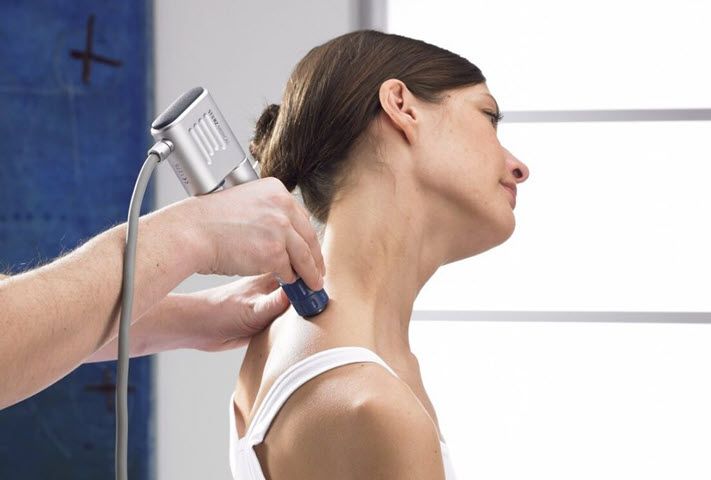
Shockwave therapy, technically called extracorporeal shockwave therapy (ESWT), uses high-energy acoustic (sound) waves delivered through a handheld device that contacts your skin over the injured tissue. The waves penetrate several centimeters into the body, reaching tendon, fascia, and bone. They do not cut or burn anything. Instead, they create controlled microtrauma at the cellular level, which triggers your body's natural healing response: new blood vessel formation, fibroblast activation, and resolution of chronic inflammation.
Radial vs Focused Shockwave
There are two main types. Radial shockwave spreads the energy out across a wider, more superficial area, ideal for fascia and surface-level tendon problems. Focused shockwave concentrates the energy into a deeper, more precise spot, used for problems like bone-related issues and deep tendon insertions. Most chiropractic clinics, including Spine-Ability, use radial shockwave, which is the better fit for the conditions chiropractic patients typically present with.
What Conditions Shockwave Therapy Treats
Shockwave is FDA-cleared and clinically supported for a list of chronic musculoskeletal conditions, including:
- Plantar fasciitis
- Achilles tendinitis
- Rotator cuff tendinopathy and calcific shoulder tendinitis
- Tennis elbow (lateral epicondylitis)
- Patellar tendinitis (jumper's knee)
- Hip bursitis and greater trochanteric pain syndrome
- Chronic low back and neck pain with trigger point involvement
- Hamstring and gluteal tendinopathy
Spine-Ability offers shockwave therapy in Apollo Beach and Riverview with Dr. Ryan Canavan, whose background in athletic training and manual therapy makes him a natural fit for high-energy modalities like this one.
Does Shockwave Therapy Hurt? The Honest Answer
What Patients Describe
Most patients describe shockwave as a strong tapping or rapid pressure sensation. It is firm, fast, and unmistakable. Some areas, particularly bony surfaces like the heel or the elbow, feel more intense than soft, fleshy areas like the hamstring or shoulder. Patients commonly use words like "pressure," "thumping," "tingly," or "deep ache." Very few describe it as sharp pain.
Pressure and Tapping, Not Sharp Pain
The mechanism is acoustic, not electrical or thermal. There is no cut, no burn, and no skin damage. The discomfort comes from the acoustic energy passing through inflamed or scarred tissue. If you have ever had a deep tissue massage on a chronically tight muscle, the intensity is in the same range, just delivered in shorter, more rhythmic pulses.
Intensity Is Adjusted to Your Tolerance
The shockwave device has multiple intensity levels and frequency settings. We start at a low level, let your body acclimate, and only increase to the therapeutic range as your tolerance allows. Patients with very acute, inflamed tissue may stay at a lower intensity for the first session or two and ramp up later. You are in control. If something is genuinely uncomfortable, we adjust on the spot.
Why Some Discomfort Means It Is Working
Chronic tendinopathy and fasciitis are not normal inflammation. They are conditions where the tissue has stopped its inflammatory healing process and become a stale, scarred, undernourished mess of fibers. Shockwave restarts that healing cycle. The mild discomfort you feel is the tissue beginning to respond, often for the first time in months or years. That is why a session that feels noticeable but tolerable usually predicts good results.
What to Expect After a Shockwave Therapy Session
Temporary Soreness
It is common to feel mild soreness in the treated area for 24 to 48 hours after a session, similar to the day after an intense workout. The area may also feel slightly warm or look briefly pink. This is the inflammatory response doing its job.
Ice and Rest Recommendations
We typically recommend avoiding heavy load on the area for 24 to 48 hours after treatment, ice as needed if the soreness is more noticeable, and skipping anti-inflammatory medications like ibuprofen or naproxen for 48 to 72 hours after each session. The reason is straightforward: we want the inflammatory response we just triggered to run its full course, because that is the response that drives the healing.
Timeline for Soreness to Resolve
For most patients, post-treatment soreness fades within 1 to 2 days. By the time you arrive for your next session, you should feel either the same as before or slightly better. Many patients notice a gradual improvement that they only fully appreciate around session three or four.
Can Shockwave Therapy Cause Damage?
When Performed Correctly, No Tissue Damage
Shockwave is one of the safest modalities in modern musculoskeletal care when delivered by a trained provider on appropriate tissue. The acoustic waves do not cut, burn, or break tissue. The controlled microtrauma created at the cellular level is the same kind your body produces during normal repair, just in a targeted, accelerated way. Clinical research on shockwave therapy for plantar fasciitis and Achilles tendinitis has consistently shown a strong safety profile alongside meaningful symptom reduction.
Who Should Not Have Shockwave Therapy
Shockwave is not appropriate for everyone. We do not treat:
- Pregnant patients (especially in the lumbar or pelvic region)
- Patients with bleeding disorders or on high-dose blood thinners
- Active malignancy in or near the treatment area
- Open wounds, skin infections, or recent acute trauma at the site
- Areas over major nerves, large blood vessels, lung tissue, or implanted pacemakers/defibrillators
- Children with open growth plates near the target zone
Spine-Ability screens for every contraindication during your initial consultation, and we will tell you honestly if you are not a good candidate. In some of those cases, Class IV K laser therapy as a complementary treatment is a safe and effective alternative.
How Many Shockwave Therapy Sessions Do I Need?
Average: 3 to 6 Sessions
Most patients respond well within 3 to 6 sessions, spaced about a week apart. Some chronic conditions, particularly long-standing plantar fasciitis or large tendinopathies, may benefit from 6 to 8 sessions. We reassess at session three, and if the response is not what we expected, we adjust the plan or refer out.
Plantar Fasciitis Timeline
For plantar fasciitis specifically, the standard protocol is 3 to 5 weekly sessions. Most patients notice some improvement after session two or three, and the full benefit often continues to develop for 6 to 12 weeks after the final treatment. The collagen remodeling that follows the inflammatory response is a slow biological process, and the results keep improving even after sessions end.
What Determines the Number of Sessions
- How long you have had the condition (acute responds faster than chronic)
- Severity at the start of treatment
- Whether you have had previous interventions like cortisone injections (which can slow response)
- Your activity load and how strictly you follow home care recommendations
- The specific tissue involved and the depth of the lesion
Is Shockwave Therapy Covered by Insurance?
Current Coverage Landscape
As of today, most commercial health insurance plans do not cover shockwave therapy for musculoskeletal conditions, classifying it as elective or investigational. Coverage varies by plan and is more common when the diagnosis is well-documented and conservative care has failed. Some PIP and workers' compensation cases will cover shockwave when it is part of a structured plan, and we are happy to communicate with adjusters on your behalf.
Self-Pay Options at Spine-Ability
Spine-Ability offers self-pay pricing that is competitive for the Tampa Bay market, plus session packages that lower the per-session cost. We talk through all of this transparently in your consultation so you know the financial picture before starting care. Compared to surgery, repeated cortisone injections, or months of lost activity, most patients find the investment well worth it.
What to Expect at Your First Shockwave Session at Spine-Ability
Your first visit begins with a focused evaluation. Dr. Canavan reviews your imaging if you have it, palpates the area, identifies the precise spot of maximum tenderness, and explains exactly what will happen. The session itself usually takes 10 to 15 minutes of active treatment. A clear ultrasound gel is applied to the area, the handpiece is moved over the tissue, and the pulses are delivered. You will feel the rhythmic tapping immediately. We check in throughout, adjust intensity, and stop briefly if needed. Afterward, you walk out without restrictions other than the brief activity limits we discussed above.
FAQ
Does shockwave therapy hurt?
For most patients, no. It is intense and unmistakable, but it is described as pressure or rapid tapping rather than sharp pain. The intensity is adjusted to your tolerance, and the sensation is part of how the treatment triggers healing.
Can shockwave therapy cause damage?
When performed by a trained provider on appropriate tissue, no. Acoustic waves do not cut or burn. Contraindications exist (pregnancy, blood thinners, active cancer in the area, certain implants), which is why we screen carefully before starting.
How many shockwave therapy sessions do I need for plantar fasciitis?
Typically 3 to 5 weekly sessions for plantar fasciitis, with improvement noticeable around session two or three. The benefit continues to build for 6 to 12 weeks after the final session as the collagen remodels.
Is shockwave therapy covered by insurance?
Most commercial health plans do not cover it. PIP and workers' comp may cover it in some cases. Spine-Ability offers transparent self-pay pricing and session packages.
How long does shockwave therapy take to work?
Many patients feel some relief after the first session, but the meaningful structural change happens over 4 to 12 weeks as the tissue remodels. Do not judge results from session one alone.
What should I do after a shockwave therapy session?
Avoid heavy load on the treated area for 24 to 48 hours, skip ibuprofen and naproxen for 48 to 72 hours (so the inflammatory healing response can complete), and ice if you are uncomfortable. Light walking and normal daily activity are fine.
Who should not have shockwave therapy?
Pregnant patients, people on high-dose blood thinners or with bleeding disorders, areas with active infection or open wounds, anyone with active cancer in the target zone, and tissue near pacemakers or major nerves or lung tissue. We screen all of this in advance.
Schedule Your Visit
If shockwave therapy is on your short list, the next step is a focused evaluation with Dr. Canavan. We will examine the tissue, explain exactly what you will feel, and lay out a session plan tailored to your condition. Spine-Ability offers shockwave therapy at both our Apollo Beach and Riverview locations. Contact us to schedule.