Is Dry Needling the Same as Acupuncture?
Dry needling and acupuncture both use thin needles, but they come from different traditions and treat pain in different ways. A Spine-Ability chiropractor in Apollo Beach and Riverview, FL breaks down the differences, similarities, and how to choose.
If you have been researching natural pain relief in Apollo Beach, Riverview, Tampa, Brandon, Ruskin, Sun City Center, Gibsonton or anywhere else in Hillsborough County, you have probably seen two services that look almost identical on the surface: acupuncture and dry needling. Both use thin filiform needles. Both target pain. Both can feel relaxing during a session. So patients ask us the same question almost every week: is dry needling the same as acupuncture?
The short answer is no. They use the same tool, but they come from completely different traditions, follow different rules about where to place the needle, and aim for slightly different outcomes. As a clinic that offers both, Spine-Ability is in a unique position to explain the differences honestly so you can choose the right approach for your body.
What Is Acupuncture?
Acupuncture is a healing practice that has been used for more than two thousand years. It is the needle-based pillar of Traditional Chinese Medicine (TCM), and it is built on a model of the body that treats health as a balance of energy, called qi, flowing through pathways called meridians.
Origins and Philosophy
In TCM, every organ and tissue is linked to a meridian, and pain or illness happens when the flow of qi along those meridians is blocked or disrupted. The acupuncturist places needles at specific points along these meridians to restore balance. These points have been mapped, studied, and refined over generations, and they do not always sit directly on top of the area that hurts. A patient with knee pain, for example, might receive needles in the lower leg, ankle, or even the hand.
How Acupuncture Works
From a modern physiological standpoint, acupuncture stimulates the nervous system, releases natural pain-relieving chemicals like endorphins, increases local blood flow, and calms the body's stress response. Many patients describe the session itself as deeply relaxing. The needles are inserted just under the skin, often barely felt, and you typically rest for 15 to 30 minutes with the needles in place.
What Conditions Respond Well to Acupuncture
- Chronic stress and anxiety
- Headaches and migraines
- Hormonal imbalances and menstrual concerns
- Digestive issues
- Sleep disturbances
- Whole-body inflammation and fatigue
- General pain that benefits from a calming, systemic approach
At Spine-Ability, acupuncture in Apollo Beach and Riverview is performed by Dr. Deidre Deany, who is a Certified Acupuncturist with more than twenty years of experience integrating Eastern and Western medicine.
What Is Dry Needling?
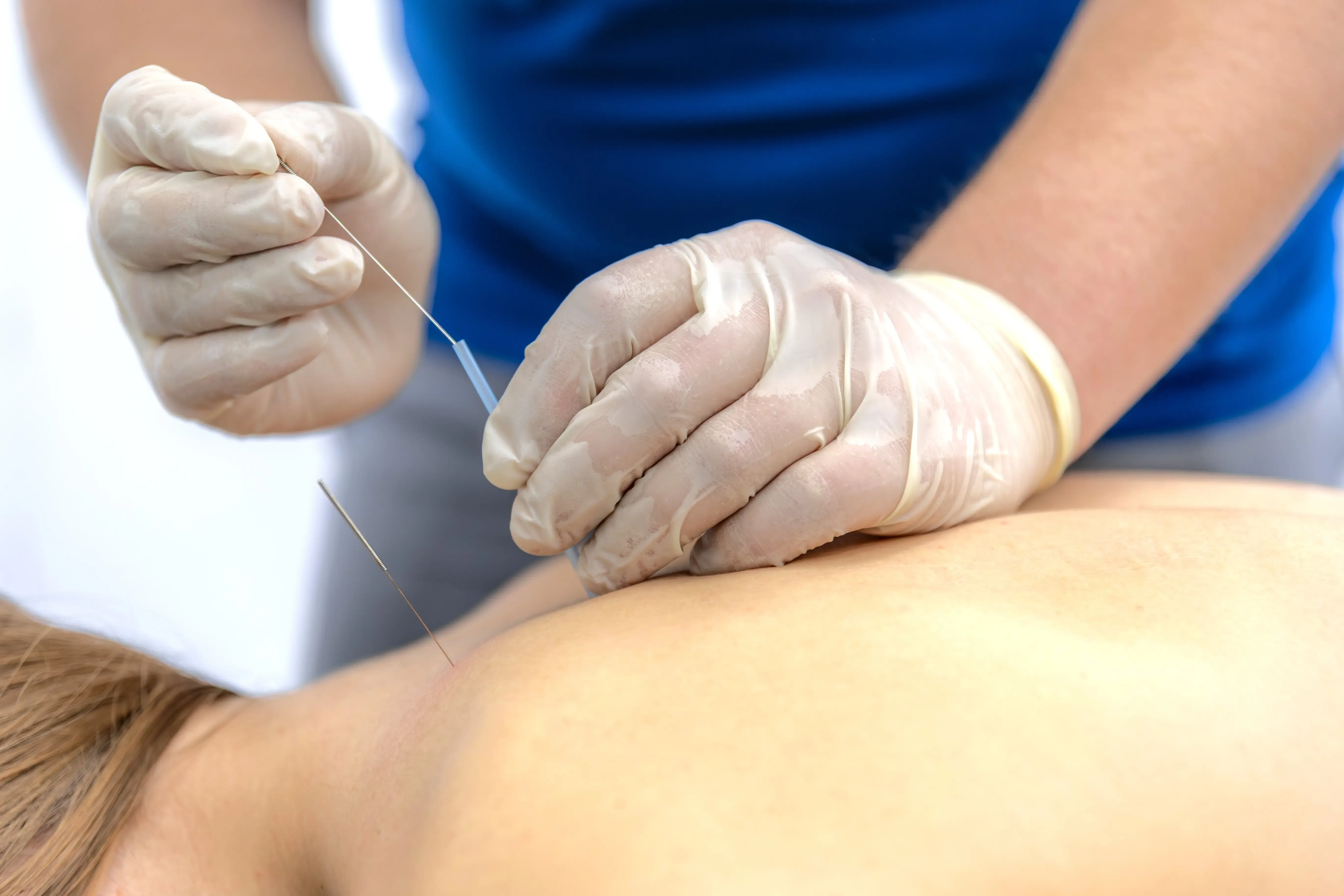
Dry needling is a much newer technique. It was developed in the second half of the twentieth century by Western physicians and physical therapists who noticed that inserting a needle into a tight, painful knot of muscle, called a trigger point, could release that knot and dramatically reduce pain. It is called dry needling because the needle does not deliver any fluid or medication. The needle itself is the therapy.
Origins: Western Anatomy and Musculoskeletal Science
Dry needling does not use meridians or qi. It is based entirely on muscle, fascia, and nervous system anatomy. The provider locates a hyperirritable spot in the muscle fiber, often the area you can feel as a hard, painful band, and inserts a thin needle directly into that spot.
How Dry Needling Works
When the needle hits the trigger point, the muscle fiber often produces a brief involuntary contraction called a local twitch response. The twitch is a sign that the right spot has been reached. It releases the chronic tension in the fiber, increases blood flow, and resets the way the nerves are communicating with that muscle. The result is often immediate or near-immediate improvement in range of motion and a noticeable drop in pain.
The Twitch Response
The twitch can feel like a quick muscle jump or a deep ache that fades within a few seconds. It is not painful for most patients, but it is unmistakable. Once the trigger point releases, the same area usually feels softer and less tender on follow-up palpation.
What Conditions Respond Well to Dry Needling
- Tension headaches from neck and shoulder trigger points
- Chronic neck pain and stiffness
- Low back pain with palpable muscle knots
- Sciatica with piriformis involvement
- Sports injuries and overuse syndromes
- TMJ-related jaw and facial pain
- Plantar fasciitis
Spine-Ability offers dry needling in Apollo Beach and Riverview with Dr. Amber Roman, who is Dry Needling certified and has spent more than a decade working with athletes, post-surgical patients, and everyday Tampa Bay residents.
Key Differences: Dry Needling vs Acupuncture
Philosophy and Training
Acupuncture is rooted in TCM and requires extensive training in meridian theory, point selection, and Eastern diagnostic methods. Dry needling is rooted in Western musculoskeletal science and is taught through certification programs that focus on muscle anatomy, palpation, and safety.
Needle Placement Rationale
Acupuncture needles are placed at predetermined points along meridians. The point chosen is based on the diagnosis according to TCM, not necessarily where the pain is. Dry needling needles are placed directly into the muscle that is generating the pain, into a trigger point you and the provider can usually feel.
Who Performs Each
Acupuncture is performed by licensed acupuncturists and, in many states, by certain medical providers with acupuncture certification. Dry needling is performed by chiropractors, physical therapists, and some MDs who have completed approved dry needling certification programs. At Spine-Ability, both are performed by chiropractors with the appropriate certifications.
Treatment Goals
Acupuncture aims to restore balance and treat the body as a whole system. Dry needling aims to release a specific muscle problem and restore normal function in that tissue.
Key Similarities: What They Share
Same Tool, Different Approach
Both techniques use sterile, single-use, hair-thin filiform needles. The needle itself is identical. The difference is entirely in where it goes and why.
Both Reduce Pain and Muscle Tension
Whether through meridian-based regulation of the nervous system or direct release of a trigger point, both modalities reduce pain, calm muscle tension, and improve circulation in the treated area.
Both Complement Chiropractic Care
Many of our patients combine needling with adjustments and soft tissue therapy. The needle work releases the muscle, and the adjustment restores joint motion. Together, they can resolve patterns of pain that neither approach fully handles on its own. You can learn more about all of our chiropractic services at Spine-Ability and how they fit together.
Does Dry Needling Hurt More Than Acupuncture?
Honest answer: dry needling can feel more intense in the moment, but it is rarely described as painful. Acupuncture needles are typically placed superficially and often barely registered. Dry needling needles go deeper into the muscle belly, and when the twitch response occurs, you will feel it. Most patients describe the twitch as a quick cramp that releases within a few seconds.
Both techniques can produce mild post-treatment soreness for 24 to 48 hours, similar to how a deep tissue massage feels the next day. This is normal and resolves on its own.
Which Is Right for You?
When Acupuncture Is the Better Choice
Choose acupuncture if you are dealing with whole-body issues like chronic stress, headaches, hormonal changes, digestive concerns, or sleep problems. It is also a great fit if you are sensitive to needles or simply want a gentler, more meditative experience. Acupuncture also pairs well with care for chronic pain that has not responded to more localized treatments.
When Dry Needling Is the Better Choice
Choose dry needling if you have a specific, palpable knot of muscle pain, an overuse injury, or a sports-related issue that needs a focused release. It is also ideal if you have tried massage or stretching without lasting relief and you want the deepest layer of the muscle worked.
Can You Do Both?
Yes, and many of our patients do. The two approaches do not interfere with each other. Some patients alternate between sessions, while others schedule both in the same week to address different layers of the same problem. The American Chiropractic Association recognizes both as valid evidence-supported tools when used by trained providers. You can learn more about the broader profession at the American Chiropractic Association.
What to Expect at Spine-Ability in Apollo Beach and Riverview, FL
Whether you book acupuncture with Dr. Deany or dry needling with Dr. Roman, your first visit will begin with a full consultation. We review your history, your goals, and your current symptoms. We palpate the areas that hurt and discuss what is realistic for your situation. From there, we recommend the approach that fits your body best, and we are always honest if a combination of services will serve you better than just one.
Both services are offered at our Apollo Beach and Riverview locations. Most needling sessions last between 20 and 40 minutes, and most patients are comfortable returning to their normal activities the same day.
FAQ
Is dry needling the same as acupuncture?
No. They use the same type of thin filiform needle, but the philosophy, training, point placement, and goal of each technique are different. Acupuncture follows Traditional Chinese Medicine meridians. Dry needling targets specific trigger points in muscle tissue based on Western anatomy.
Does dry needling hurt?
Most patients describe it as a brief pressure or quick cramp when the needle hits the trigger point. It is not the sharp pain people often imagine. Some post-treatment soreness for a day or two is normal and similar to how a deep tissue massage feels.
What is dry needling used for?
It is used to release muscle trigger points, reduce localized pain, improve range of motion, and treat overuse and sports injuries. Common targets include the neck, shoulders, low back, hips, calves, and feet.
Is dry needling safe?
Yes, when performed by a certified provider using sterile single-use needles. Spine-Ability follows strict clean-technique protocols, and Dr. Roman is dry needling certified with extensive clinical experience.
How many dry needling sessions do I need?
It depends on the condition. Acute muscle issues may resolve in 2 to 4 sessions. Chronic patterns often need 4 to 8 sessions, sometimes paired with adjustments and rehabilitative exercises for lasting results.
Can a chiropractor do dry needling and acupuncture?
In Florida, chiropractors can perform dry needling if they hold the appropriate certification, and they can perform acupuncture if they hold a separate acupuncture certification. Dr. Deany is a Certified Acupuncturist. Dr. Roman is Dry Needling certified. Different credentials, different services, both legal and well-regulated.
Which is more effective for back pain, dry needling or acupuncture?
For back pain caused by a specific muscle trigger point, dry needling is usually faster. For back pain tied to stress, sleep, or whole-body inflammation, acupuncture often gives more lasting relief. Many patients benefit from both, paired with chiropractic adjustments.
Schedule Your Visit
If you are deciding between dry needling and acupuncture, the easiest next step is a consultation. We will examine you, listen to your goals, and recommend the right approach (or the right combination) for your body. Spine-Ability serves patients across Apollo Beach, Riverview, Tampa, Brandon, Ruskin, Sun City Center, Gibsonton, and the rest of Hillsborough County. Contact us to book your visit at either our Apollo Beach or Riverview location.